Educational content only. Not financial advice. Always do your own research. See full Disclaimer.
So what is a stock, really? At its core, a stock is a slice of ownership in a real, working company. Buy one, and you literally own a tiny piece of that business. In this guide I'll walk you through what shares are, how holding them can put money in your pocket through capital gains and dividends, what rights you get as a shareholder, and how to read a basic stock quote. No jargon, no hype, just the foundations every beginner should have.
What a stock is: owning a fraction of a real business
A stock represents partial ownership of a company. When a business wants to raise money to grow, it can sell off small ownership pieces of itself to the public, and each of those pieces is a stock. Buy one and you legally own a fraction of that company: its factories, its brand, its future profits, all of it, in proportion to how much you hold.
Here's the part beginners tend to miss. A stock is not a lottery ticket or a number on a screen that randomly bounces around. It's a real claim on a real business. If you own shares of a company that makes phones, sells coffee, or builds software, you're a part-owner of that operation. That connection between the stock and the actual company behind it is the single most important mindset shift for a new investor. For the bigger picture of where these shares get bought and sold, take a look at our guide on how the stock market works.
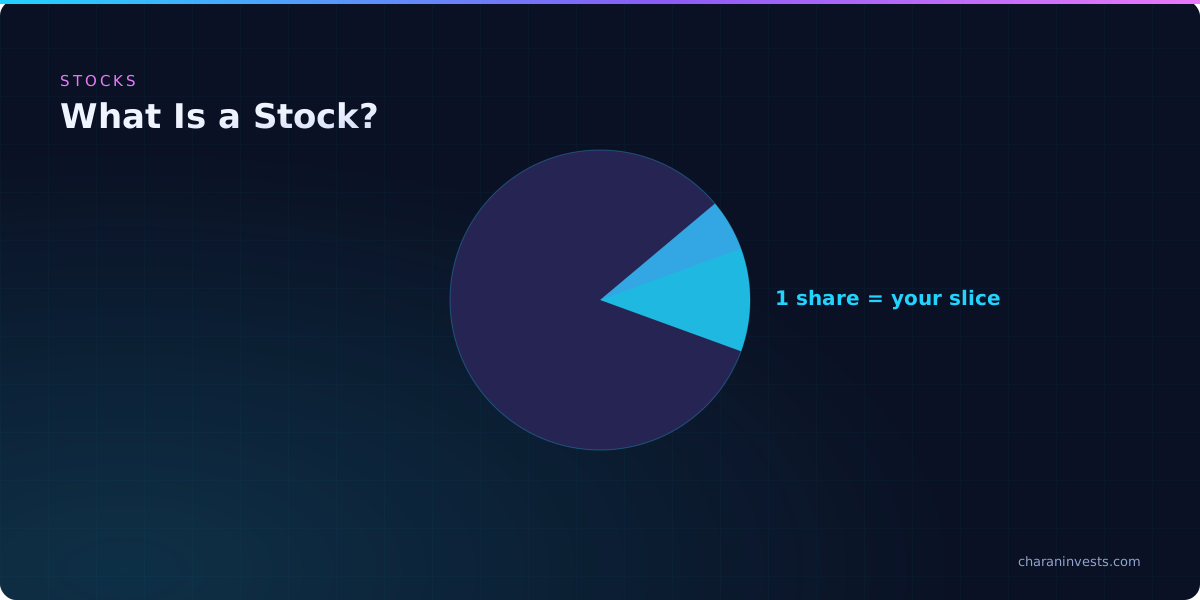
A stock isn't a ticket you gamble on. It's a piece of a business you own.
Shares, share count, and what one share actually buys you
You'll hear "stock" and "share" used almost interchangeably, and honestly that's mostly fine. The small difference is that "stock" is the general idea of ownership, while a "share" is one single unit of it. So what is a share? It's the smallest standard piece of a company you can buy. If a company has issued one million shares and you own one of them, you own one-millionth of the business.
That total, meaning the number of shares a company has issued, is called its share count (or shares outstanding). It matters because your slice is always relative to the whole. Owning 100 shares of a company with only 100 shares out there would make you the full owner. Owning 100 shares of a company with a billion shares out there makes you a very, very small partner. Here's what one share typically gets you:
- A proportional claim on the company's future profits and assets.
- The right to vote on certain company matters (for common stock).
- Eligibility for dividends, if and when the company pays them.
- The freedom to sell your share to another investor whenever the market is open.
The two ways you make money: capital gains and dividends
There are exactly two ways a stock can put money in your pocket, and every beginner should know both cold.
1. Capital gains
A capital gain is just selling a stock for more than you paid. Buy a share at $50, sell it later at $80, and that $30 profit is your capital gain. This is how most people picture making money in the market: buy low, sell higher. The catch is that the reverse can happen too. If the price falls and you sell, you take a capital loss. Prices move in both directions, which is exactly why investing always carries risk.
2. Dividends
So how do dividends work? Some companies hand a portion of their profits straight to shareholders as cash payments called dividends, usually every quarter. If you own 100 shares and the company pays a $0.50 dividend per share, you get $50 just for holding the stock. Not every company does this. Plenty of younger, fast-growing companies pour all their profits back into the business instead, and both approaches can make good sense.
Put simply, capital gains come from the price going up, and dividends come from the company sharing its profits. A long-term investor often gets a bit of both.
What shareholders get: voting rights, dividends, and a claim on growth
Being a shareholder is about more than watching a price tick up and down. As a part-owner, you're entitled to a real bundle of rights, even if you only hold a single share:
- Voting rights: Common shareholders usually get one vote per share on things like electing the board of directors.
- Dividends: When the company chooses to distribute profits, you receive your proportional cut.
- A claim on growth: If the business becomes more valuable over time, the value of your ownership stake tends to rise with it.
- A residual claim on assets: If the company were ever wound down, shareholders have a claim on whatever's left after debts and other obligations are paid.
That last point is worth underlining. Shareholders are last in line if a company fails. Lenders and bondholders get paid before you do. That's the trade-off of ownership: you share in the upside, but you also carry more of the risk than someone who simply lent the company money.
Common stock vs. preferred stock (and why beginners start with common)
When people say "stock," they almost always mean common stock, and that's exactly where most beginners should start. Still, it helps to know the common stock vs preferred stock distinction so the terms don't trip you up later.
- Common stock gives you voting rights and the full upside if the company grows. Its dividends, when paid, can rise over time but aren't guaranteed. This is what you're buying when you purchase shares of a typical company through a brokerage app.
- Preferred stock usually pays a fixed dividend and sits ahead of common stock if the company pays out or gets liquidated, but it typically comes with little or no voting power and less exposure to the company's growth.
For the vast majority of new investors, common stock is the natural place to begin. It's what's quoted on your screen, it's the most liquid, and it gives you a direct stake in the company's long-term success. Preferred stock is more of a specialized, income-focused tool you can look into much later.
What moves a stock's value over the long run vs. day to day
One of the more confusing things for beginners is that a stock's price can swing wildly in a single day even when nothing about the business has actually changed. It helps to separate two timeframes.
Day to day
In the short term, prices move on supply and demand, meaning how many people want to buy versus sell right now. News headlines, rumors, earnings surprises, and the overall mood of the market can all shove the price around hour to hour. A lot of that short-term noise has very little to do with the company's real, long-term worth.
Over the long run
Over years, a stock's value tends to track the underlying business: its profits, its growth, and its ability to generate cash. A company that steadily grows its earnings will, over time, generally see its stock value follow. That's why long-term investors focus on the quality of the business rather than the daily ticker. As the old saying goes, in the short run the market is a popularity contest, but in the long run it weighs real results.
Tickers, market cap, and reading a basic stock quote
Every public company is identified by a short ticker symbol, a handful of letters used to look it up, sort of like a username for a stock. When you pull up a quote, a few key terms show up again and again:
- Ticker: The abbreviation that identifies the stock (for example, a company's name shortened to a few letters).
- Price: The most recent price one share traded at.
- Market cap: Short for market capitalization, which is the share price multiplied by the total number of shares. It's the market's estimate of the whole company's value.
- Volume: How many shares changed hands during the trading day.
Market cap is especially handy because it tells you the size of the business, not just the price of one slice. A $500 stock isn't "expensive" and a $5 stock isn't "cheap" in any meaningful way until you factor in how many shares exist. Two companies can have identical prices per share and still be worth wildly different amounts overall. Keep in mind the US market is open 9:30am to 4:00pm ET on regular trading days, and these quotes update live during those hours.
Stocks are just the start: a quick look at what else you can trade
Stocks are the foundation, but they aren't the only thing investors buy. As you grow, you'll run into other instruments, each with its own risk and purpose:
- ETFs and index funds: Baskets that hold many stocks at once, giving you instant diversification in a single purchase.
- Bonds: Loans to a company or government that pay interest, generally lower risk and lower return than stocks.
- Options: Contracts tied to a stock's price that can be powerful but carry a lot more risk. They're best left until after you've got the basics down, so start with our beginner explainer on what options are for beginners.
For now, getting comfortable with plain old stocks is more than enough. They're simple to understand, easy to buy, and the perfect place to build your foundation before you touch anything more advanced.
When you feel ready for the next step, the most natural follow-up is learning how to buy your first stock, the practical, button-by-button walkthrough of actually placing your first order.
You don't have to figure all of this out on your own. The free Charan Invests community is home to 35,000+ beginner investors working through these exact fundamentals together on Discord. It's a friendly spot to ask the "dumb" questions and watch other people learn right alongside you.
Keep learning
Want to hear these ideas explained out loud? Search YouTube for "what is a stock explained for beginners" and you'll find plenty of clear, visual walkthroughs to reinforce what you just read.
This article is educational content only and is not financial advice. Investing involves risk, including the possible loss of capital.
Frequently Asked Questions
A stock is a small piece of ownership in a company. When you buy a share, you own a fraction of that business, including a proportional claim on its future profits and assets. Owning stock makes you a part-owner, not just someone betting on a price.
The terms get used interchangeably, but there's a subtle difference. 'Stock' is the general concept of ownership in one or more companies, while a 'share' is one single unit of that ownership. So you might own stock in a company, and the specific number you hold is measured in shares.
There are two main ways. The first is capital gains, which just means selling a stock for more than you paid for it. The second is dividends, cash payments some companies make to shareholders out of their profits, usually every quarter. Long-term investors can benefit from both at the same time.
A dividend is a portion of a company's profits paid out to shareholders, usually in cash and usually every quarter. If you own 100 shares and the company pays a $0.50 dividend per share, you receive $50 just for holding the stock. Not every company pays dividends, since many growing companies reinvest their profits back into the business instead.
Common stock gives you voting rights and full exposure to the company's growth, but its dividends aren't guaranteed. Preferred stock usually pays a fixed dividend and gets paid before common stock if the company distributes profits or is liquidated, though it typically comes with little or no voting power. Most beginners start with common stock because it's the standard, most liquid type quoted on brokerage apps.
Apply it live
Learn with 35,000+ beginners
Every lesson gets discussed live in the free Discord. Bring your questions and learn from real market moves.
Join Free Discord →Explore VIP