
Educational content only. Not financial advice. Always do your own research. See full Disclaimer.
If you've been anywhere near investing, you've heard these words thrown around a hundred times. Getting the bull vs bear market difference straight in your head is honestly one of the best early wins for a beginner. This guide covers where the animal names come from, what actually separates the two phases, how a correction differs from a crash, why prices move in cycles, and how to keep a level head no matter which direction things are going.
Where 'bull' and 'bear' come from (and why it matters)
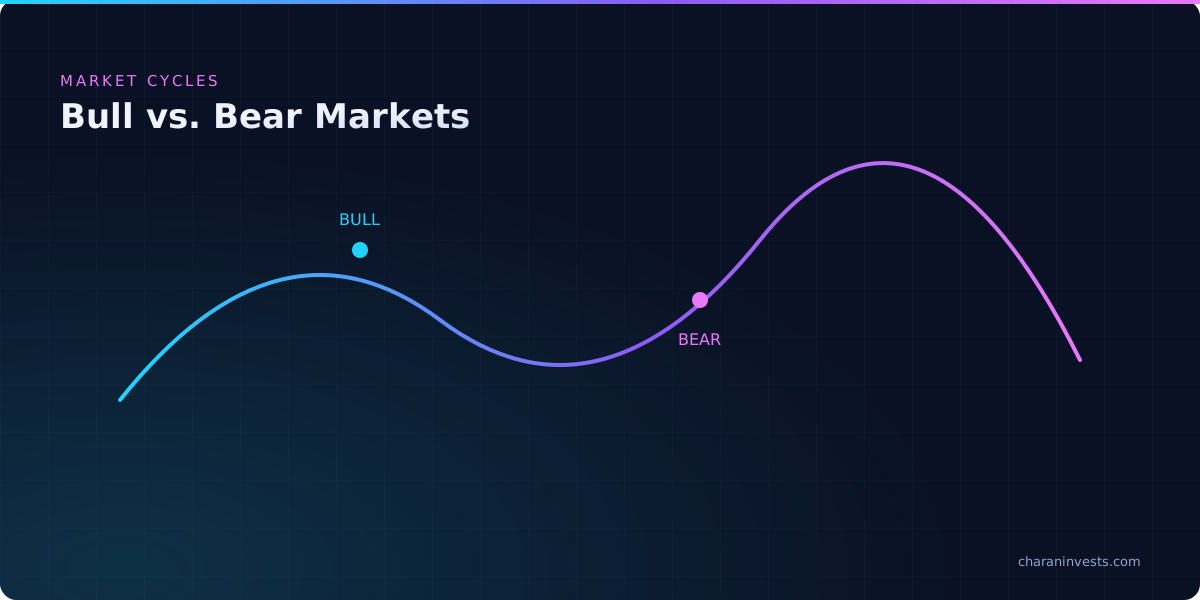
The story most people tell traces back to how each animal fights. A bull throws its horns up, and a bear swipes its paws down. Investors ran with that picture. A "bull market" is one where prices push higher, and a "bear market" is one where prices get shoved lower. The names stuck around because they're so easy to visualize.
Why bother with the trivia? Because the words you use quietly shape how you feel. When a headline blares "bear market," it lands like something scary and permanent. It isn't. A bear market is just a phase, not a ruling on your whole future. Remembering that helps you stay steady while everyone around you loses it. If you're still laying the groundwork, our guide on how the stock market works reads well right alongside this one.
What defines a bull market: rising prices and optimism
So what is a bull market? Plainly put, it's a stretch of time (often months or years) where prices generally climb and investors feel confident. There's no official rulebook, but people commonly use a rise of 20% or more off a recent low, with the trend still heading up.
Bull markets usually have a few things in common:
- Prices carve out higher highs and higher lows as time passes.
- The economic news skews positive. Hiring is up, companies are growing.
- More people feel fine buying in, and that buying feeds the rise.
- Optimism grows, and near the top it can slide into overconfidence.
The catch is that bull markets feel wonderful, and that good feeling nudges beginners toward bigger risks than they'd normally take. Rising prices make everybody look brilliant, right up until the trend flips.
What defines a bear market: the 20% rule and rising fear
Now the other side. What is a bear market? The common definition is a drop of 20% or more from a recent high that sticks around for a while. Where a bull market runs on optimism, a bear market gets painted with fear, caution, and steady selling.
In a bear market you'll usually notice:
- Prices making lower highs and lower lows.
- Headlines fixated on recession, layoffs, or general uncertainty.
- Investors selling to "stop the bleeding," which drags prices down further.
- Solid companies going on sale even when their long-term story hasn't changed.
A bear market doesn't care if you're right. It only cares if you can keep your cool.
Here's what beginners tend to miss: bear markets don't last. Every bear market in the major US indexes has, so far, been followed by a new bull market that climbed higher than before. That's no promise about the future, but it does put the panic in perspective.
Corrections, crashes, and pullbacks: knowing the difference
The bull market vs bear market picture snaps into focus once you learn a couple more words. Not every dip is a bear market, and getting the market correction vs crash distinction right saves you from overreacting to totally normal swings.
The rough thresholds
- Pullback: a small drop, often around 5%. These happen all the time and are completely ordinary.
- Correction: a decline of roughly 10% or more off a recent high. Uncomfortable, sure, but common, and they usually recover.
- Bear market: a decline of 20% or more that holds for weeks or months.
- Crash: a sudden, sharp drop over a very short window, days rather than months. A crash can kick off or speed up a bear market.
The real gap between a correction and a crash is speed. A correction slides down gradually while a crash plunges. Both can rattle you, but neither one means the long game is finished.
Why markets move in cycles (and why perfect timing is a myth)
Markets don't travel in straight lines. They kind of breathe in and out. Stretches of growth give way to stretches of contraction, then growth returns. What drives that rhythm is a mix of company earnings, interest rates, the wider economy, and plain old human emotion.
It's tempting to imagine you'll just sell at the top of a bull market and buy back at the bottom of a bear market. In practice? Almost nobody pulls that off reliably, pros included. Tops and bottoms only look obvious after they've passed. Chase them and you'll usually sell too soon, miss the bounce, or freeze up completely.
That's why the strategies aimed at beginners lean on time in the market instead of timing the market. If you want to dig into what really drives a company's value underneath all the noise, our breakdown of fundamental vs technical analysis is a good next stop.
How beginners should think in a bull market vs. a bear market
Your mindset should shift a bit with the seasons, even when the core plan holds steady.
In a bull market
- Enjoy the gains, but don't mistake a rising market for personal genius.
- Don't pile on extra risk just because everything happens to be going up.
- Keep contributing at a steady clip instead of dumping it all in at the peak.
In a bear market
- Keep in mind that lower prices can be an opportunity for long-term investors, not only a threat.
- Fight the pull to sell out of pure fear.
- Focus on what's actually in your hands: how much you invest, how big your positions are, and how diversified you stay.
This is exactly where knowing how to invest in a bear market pays off. Protecting your capital matters just as much as growing it, which is why we gave risk management and position sizing its own full guide. Whatever the market's doing, knowing how much to put behind any single idea keeps a rough patch from turning into a wipeout.
Dollar-cost averaging: the strategy that works in any market
If any one approach ducks the whole bull-versus-bear guessing game, it's dollar-cost averaging (DCA). The idea couldn't be simpler. You invest a fixed amount on a regular schedule, say every two weeks or once a month, whether prices are up or down.
Here's why it works so well for beginners:
- When prices are high, your fixed amount buys fewer shares.
- When prices are low, that same amount buys more shares.
- Over time this evens out your average cost and takes away the stress of nailing the perfect moment.
Dollar-cost averaging won't make you rich overnight, and it doesn't claim to beat every other method. What it does is keep you investing consistently through both bull and bear markets, which turns out to be the hardest and most valuable habit there is.
The emotional side: why fear and greed wreck beginner portfolios
Time for the uncomfortable part. Most investing mistakes aren't really about math. They're about emotion, and two feelings do the bulk of the damage.
Greed turns up in bull markets. When everything's climbing, it's easy to chase hot stocks, wave off the risk, and bet more than you can afford. Fear turns up in bear markets. When prices slide, panic-selling locks in the losses and shoves people out right before the recovery they'd been waiting on.
The people who do well over the long haul aren't the ones with secret tips. They're the ones who make a plan and stick with it while their emotions scream to do the opposite. That kind of discipline is a skill, and like any skill it's easier to build with other people around.
That's a big reason the Charan Invests community exists. It's a free Discord with 34,000+ beginner investors figuring this out together, asking questions, and keeping each other grounded through every phase of the market. Watching other people stay calm in a downturn (and humble in a rally) is one of the quickest ways to grow your own steadiness. You can also follow along with real, educational trade ideas to see these concepts play out in practice.
Keep learning
Want a visual walkthrough to go deeper? Try searching "bull market vs bear market explained for beginners" and you'll find plenty of beginner-friendly videos.
Wherever we happen to be in the cycle, the goal doesn't change. Understand what's going on, keep your emotions in check, and keep showing up. Bull and bear markets will roll through for the rest of your investing life, and the better you understand them, the less power they have to scare you.
This article is educational content only and is not financial advice. Investing involves risk, including the possible loss of capital.
Frequently Asked Questions
A bull market is a stretch of rising prices and investor optimism, while a bear market is a stretch of falling prices and rising fear. A handy rule of thumb: a bear market involves a drop of 20% or more from a recent high, and a bull market involves a rise of 20% or more from a recent low. Both are normal, recurring parts of the market cycle.
There's no set length, but historically bull markets have tended to run a lot longer than bear markets. Bull markets can stretch across several years, while bear markets are often measured in months. The real duration swings widely depending on the economy, interest rates, and how investors feel, so nobody can call it precisely.
A correction is a decline of roughly 10% or more from a recent high that usually plays out gradually over days or weeks. A crash is a sudden, sharp drop that happens fast, often within a few trading days. The main difference is speed. A correction is a slide, and a crash is a violent plunge that can set off or speed up a bear market.
A lot of beginners do best by staying consistent instead of panicking. Approaches like dollar-cost averaging, where you invest a fixed amount on a regular schedule, let you keep buying through downturns without trying to guess the bottom. The habits that matter most are managing how much you risk, staying diversified, and steering clear of emotional, fear-driven selling. This is education, not advice, so always weigh your own situation.
There's no one right answer, because it comes down to your goals, time horizon, and risk tolerance. Bear markets can put quality companies on sale, which long-term investors may see as opportunities, though they come with more uncertainty too. Instead of trying to perfectly time bull or bear conditions, many beginners just invest consistently over time, which takes away the pressure of guessing the perfect entry.
Apply it live
Learn with 34,000+ beginners
Every lesson gets discussed live in the free Discord. Bring your questions and learn from real market moves.
Join Free Discord →Explore VIP